Gayo Arabica from Indonesia — the Aceh highlands, wet-hulled and honest about grades
By the TapakNusa export desk · updated 2026-09-04. For roasters who keep hearing "Gayo" and want to know what is actually behind the name — numbers included, adjectives not.
1. The origin
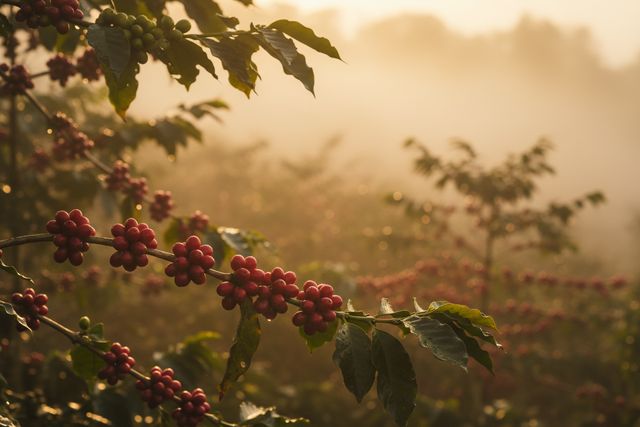
Gayo arabica grows on the highlands around Lake Tawar, Aceh, roughly 1,100-1,600 m, harvested October to May. Nearly all of it is processed giling basah (wet-hulled) — parchment is stripped off the bean while still damp. That single step is why Gayo cups the way it does: full body, low acidity, earthy-herbal, sometimes woody with age. If your blend brief says "classic Sumatra profile", this is the origin that wrote it.
2. The market, in numbers
Indonesia produced ~12.5 million bags in 2025/26 and exported about 7.8 million bags of green beans, up 27% year over year (USDA GAIN ID2025-0039). Specialty Gayo has been indicated around $8-16/kg FOB depending on cup score and lot size — a range, never a promise; our quotes are issued against a confirmed lot and documents. The volume game belongs to aggregators. The gap we build for is the opposite: micro-lots and fine-robusta-class separations moved LCL to roasters in the US, Japan and Korea, with the paperwork to prove origin.
3. What "Grade 1" should mean — measured, not said
- Moisture 10-12% (meter reading, lot average)
- Defect count per 350 g sampled (SCA protocol)
- Screen size distribution
- Cupping score and notes — recorded per lot on the COA
If a seller will not put those four lines in writing per lot, the grade is a word. Our COA format shows exactly what travels with every Gayo quote.
4. Trade lanes worth knowing
Malaysia/Singapore: 0% under ATIGA/RCEP — the practical training lane for a first shipment. The EU's GSP preference for Indonesia ends in 2026 and IEU-CEPA (signed track, EIF expected early 2027) closes most of that gap — during the window, EU pricing needs the tariff reality stated openly, which we do in the quote.
5. What we can honestly promise today
We source Gayo through collector groups we sit with, cup lots, and agree drying standards before committing volume. Until a season's lots are cupped and documented, availability is confirmed case by case — samples first, then LCL trial (from ~300 kg), then 1×20 ft (~19 t) commercial contracts. No warehouse-on-three-continents story; a document trail instead.
Wet-hulled vs washed — can we get washed Gayo?
Most Gayo is wet-hulled by tradition and infrastructure. Fully washed Gayo exists in smaller volumes — request it explicitly and we confirm availability per season before quoting, not after.
Can you ship GrainPro-style liners?
Liner-lined packaging for green beans is a standard we can quote per lot (it changes packing cost); confirm at RFQ with your container transit time.
Minimum order for a first trial?
LCL trials from roughly 300 kg are how we start with a new roaster — sample scale first if cupping matters to your program. Send the spec, a human answers within one working day (target).
More origins: Toraja · Lampung robusta · products · all notes. Updated 2026-09-04 — indicative figures are market context; the signed contract defines everything.