
The journey of a leaf
From a farmer's weathered hands to a steaming table overseas — what the journey of one banana leaf looks like, and why every step of it changes a family's income.
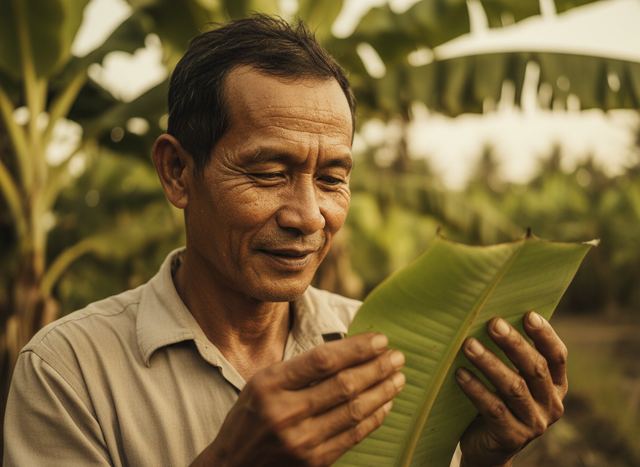
5:40 in the morning, in the rows
The leaf's journey starts before the sun gets honest. A farmer walks his banana rows with a blade and an eye trained by years he cannot shortcut: which stalk is ready, which leaf will fold without cracking, which one gets left for another week. He wipes his face with the back of his wrist and keeps judging — one leaf at a time, hundreds of times, until the bundle on his shoulder is a morning's work.
For as long as anyone can remember, that morning's worth of leaves sold for whatever a collector offered at the roadside. No receipt, no agreement, no reason to plant better. The leaf left the garden and the farmer's name stayed behind with it.

What export changes — on paper, in writing
Here is the whole idea of TapakNusa, without the brochure voice. When an export desk sits down in the garden and writes three things into an agreement — a price the farmer can plan around, a sorting standard both sides understand before the first cut, and a weekly capacity that is honest about bad-weather weeks — the leaf stops being a lottery. It becomes a product with a name on the paperwork.
Not a promise of riches. A steadier floor: income that arrives on schedule, from someone who returns every week, for a leaf that was always good enough — it simply never had anywhere to go.
The leaf's best hours
Cut in the morning, the leaf is rinsed and graded the same day: length measured against a written bar, tears rejected, freshness recorded on the lot. Then it is vacuum-sealed — one kilogram, labeled — inside ventilated cartons at our Tangerang handling point. That same-day discipline is not luxury; it is the leaf's life expectancy being spent wisely, because every hour between cut and seal is a day subtracted from its arrival.
Then the sea part: three to seven days to Singapore or Malaysia, chilled, with a phytosanitary certificate and a Certificate of Origin traveling in the same folder as the invoice. The lot code on the carton and the code on the papers are the same code. If anyone, anywhere, ever wants to know where this leaf came from — the answer is a garden with a name.
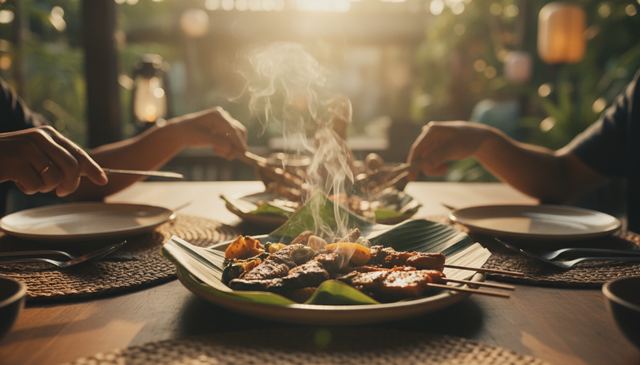
The last step happens at a table
An evening restaurant, somewhere abroad. A plate arrives underlaid with a leaf, wide and green, releasing a faint warm aroma under the steam. Diners see the presentation. The kitchen sees a wrap that survived the journey. And in a garden in Indonesia, a number lands in a farmer's book — the export margin's share, agreed in writing, arriving on schedule, for the leaf he judged at 5:40 in the morning.
That is the loop this company exists to close: the further the leaf travels, the more of its value finds its way back to the hands that grew it.
Buyers who join this journey get more than leaves: a written spec, lot-level traceability, inspection rights at loading, and documents that match the cartons. Start with a sample — the farmer starts with a written agreement. Both sides begin the same week.
Meet the leaf yourself: the farm behind our first lots · product page · specification · request a sample.